
 Injectable Steroids
 Oral Steroids
 Peptides
 HGH
HGH Sexual Health
 SARMs
SARMs Syringes & More
 Cycle Support
TB-500 (Thymosin Beta-4) Side Effects: A Comprehensive Safety Guide

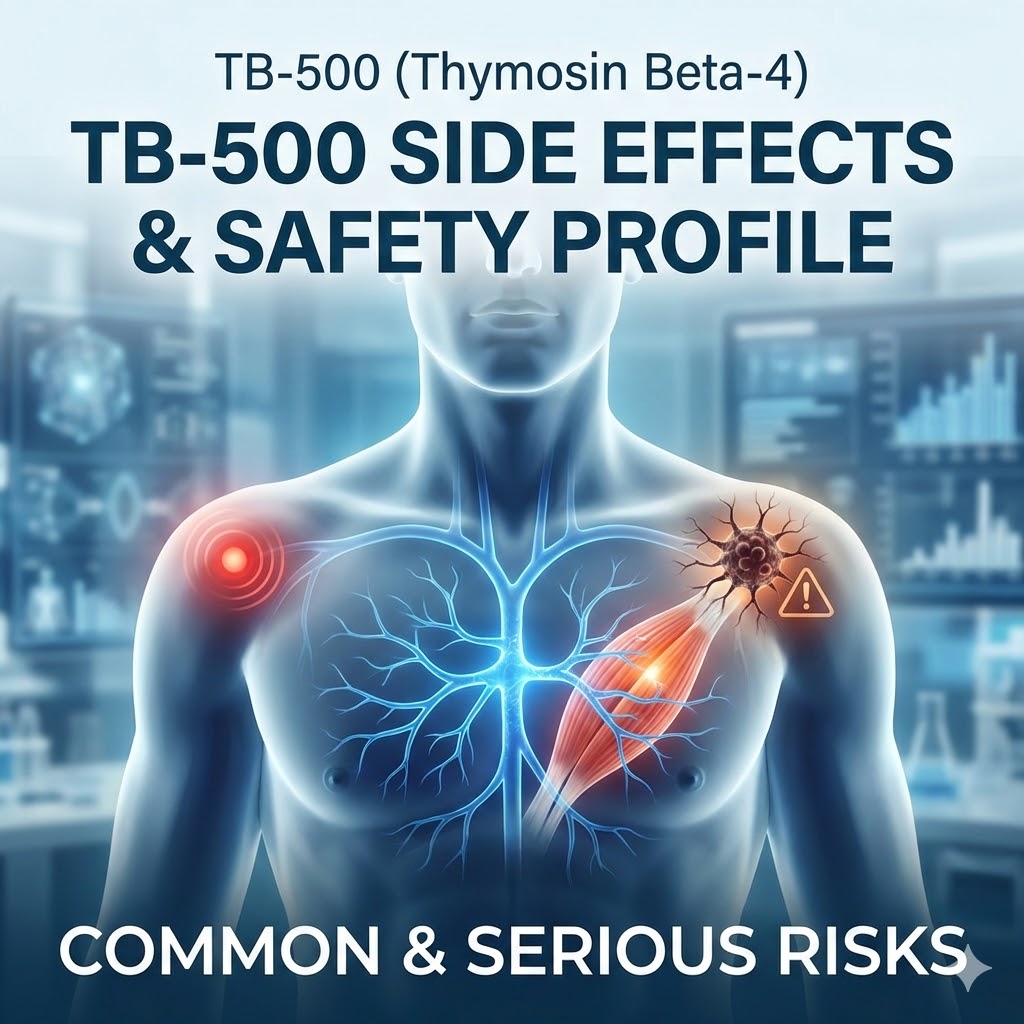
TB-500 (Thymosin Beta-4) Side Effects: A Comprehensive Safety Guide
If you are searching for information on “TB-400 side effects,” it is important to first clarify a common misunderstanding: TB-400 is almost certainly a typo or a mislabeled reference to TB-500, which is a synthetic fragment of the naturally occurring protein Thymosin Beta-4 (Tβ4).
TB-500 is powerful for tissue repair, but users must understand the serious theoretical risks associated with systemic cell migration and angiogenesis.
TB-500 has gained significant popularity in athletic and recovery circles for its potential to accelerate healing, improve flexibility, and reduce inflammation.2 However, because it is a potent bioactive compound that influences cell migration and blood vessel formation, it comes with a unique profile of potential side effects and safety considerations.
This article provides a detailed, honest look at the safety profile of TB-500, distinguishing between common, manageable reactions and theoretical long-term risks.
What is TB-500 and How Does It Work?
To understand the side effects, you must understand the mechanism. TB-500 functions primarily by regulating actin, a protein essential for cell structure and movement.3 When tissue is injured, Thymosin Beta-4 is naturally upregulated to help cells migrate to the site of damage and repair it.
Its primary actions include:
-
Actin Sequestration: It helps organize the cell structure to allow for mobility.
-
Angiogenesis: It promotes the formation of new blood vessels, which improves blood flow to injured tissue.
-
Anti-Inflammatory Action: It can modulate the immune response to reduce swelling.
While these mechanisms are beneficial for healing a torn rotator cuff or a strained hamstring, they are also the primary drivers of its potential side effects.
1. Common, Acute Side Effects
Most users who report side effects from TB-500 experience mild, transient issues that resolve once the body adjusts to the peptide or administration stops.
Injection Site Reactions
As with any injectable compound, the most frequent complaints are localized.
-
Redness and Irritation: Users frequently report a small red welt or itching at the injection site.7 This is often due to the preservatives in the Bacteriostatic Water used to reconstitute the peptide rather than the peptide itself.
-
Pain or Bruising: Poor injection technique or injecting into the same spot repeatedly can cause localized soreness.
The “Peptide Flu”
A phenomenon often noted in anecdotal logs—though less formally documented in clinical trials—is a temporary feeling of lethargy or sickness upon starting a cycle.
-
Headaches: Some users experience rapid onset headaches shortly after administration, which may be linked to vasodilation (widening of blood vessels).
-
Fatigue: A feeling of being “drained” or extreme tiredness is occasionally reported, particularly when users take high “loading phase” doses.
-
Nausea/Dizziness: Temporary lightheadedness can occur, likely due to rapid shifts in blood pressure or systemic response to the peptide.
2. The Major Safety Concern: Angiogenesis and Cancer Risk
This is the most critical section for anyone considering TB-500. The “people-first” approach requires us to look at the data honestly without fear-mongering.
The Mechanism: TB-500 promotes angiogenesis, the growth of new blood vessels. In a wound, this is good; it brings nutrients to repair the area. However, tumors also rely on angiogenesis to grow and metastasize.
The Evidence:
- Not a Carcinogen: There is currently no evidence suggesting that Thymosin Beta-4 causes normal healthy cells to mutate into cancer cells (it is likely not a “cancer initiator”).
- Potential Accelerator: Research indicates that Tβ4 is often overexpressed in existing cancer cells (such as pancreatic or colon cancer) and may help them grow or spread. If a person has active but undiagnosed cancer, taking a powerful angiogenesis promoter could theoretically speed up the tumor’s growth.
- Safety Takeaway: If you have a history of cancer or are currently undergoing treatment, you should strictly avoid TB-500. The mechanism that heals injuries (cell migration and vessel growth) is the same mechanism used by tumors to spread.
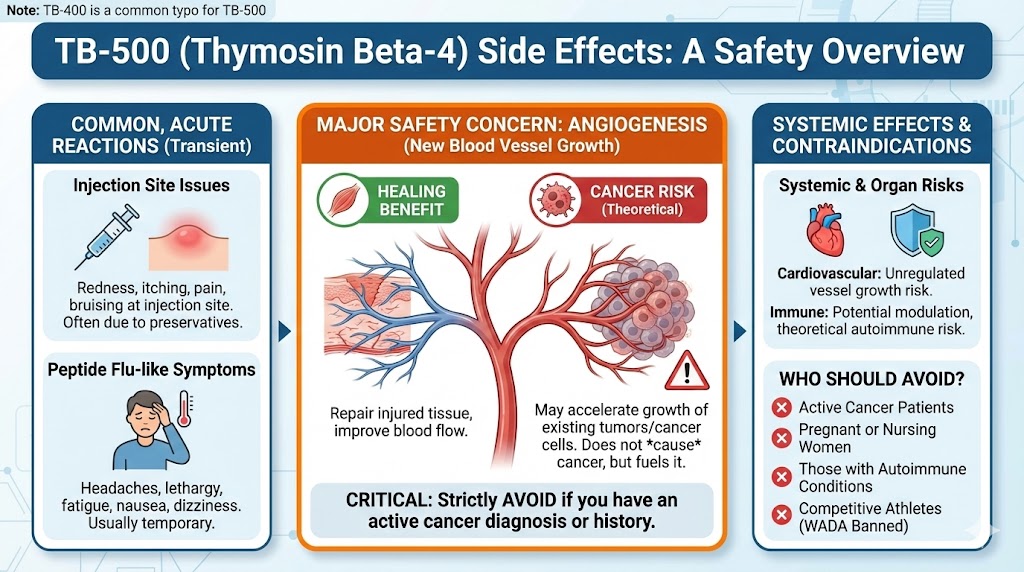
A quick reference guide to the safety profile of Thymosin Beta-4, comparing manageable acute reactions against critical long-term health warnings.
3. Systemic and Organ Effects
Because TB-500 acts systemically (circulating through the whole body), it does not just target the injured knee or shoulder.13 This systemic nature distinguishes it from other peptides but also widens the scope of potential interactions.
Immune System Modulation
Thymosin Beta-4 plays a role in the immune system.14 While it is generally anti-inflammatory, artificially elevating levels could theoretically alter immune responses.
-
Positive: Some studies suggest it may help reduce inflammation in liver disease (NAFLD) and improve liver function scores.
-
Negative: There is a theoretical risk that modulating tissue growth factors could trigger autoimmune responses in susceptible individuals, though this is not widely documented in human trials.
Cardiovascular Implications
Since TB-500 affects heart tissue repair and vessel growth, it has cardiovascular effects.
-
Heart Health: Research suggests Tβ4 can protect heart muscle after ischemic injury (like a heart attack) by promoting cell survival.
-
Risk: However, unregulated angiogenesis in the cardiovascular system without an injury to repair is a complex biological state that should be managed with caution.
4. Comparisons: TB-500 vs. BPC-157 Side Effects
These two peptides are often mentioned in the same breath, or even sold as a TB-500 / BPC-157 Blend. Understanding their differences helps in risk management.
| Feature | TB-500 | BPC-157 |
| Primary Action | Systemic (Whole Body) | Local & Systemic (Gut/Site Specific) |
| Main Mechanism | Actin regulation, Angiogenesis | Nitric Oxide pathway, Growth Hormone receptors |
| Primary Side Effect | Fatigue, Lightheadedness | GI upset (rare), Nausea |
| Cancer Concern | Angiogenesis (Vessel growth) | Angiogenesis (Vessel growth) |
| Best For | Muscle bellies, Flexibility, General inflammation | Tendons, Ligaments, Gut Health |
While both promote blood vessel growth, TB-500 is generally considered to have a more profound effect on cell migration and muscle tissue, whereas BPC-157 is often favored for connective tissue and gut issues.
5. Dosing and Administration Risks
Many side effects are dose-dependent. The “more is better” approach is dangerous with signaling peptides.
The “Loading Phase” Controversy
Historically, users would utilize a high-dose “loading phase” (e.g., 10mg per week) followed by a maintenance dose.
-
Increased Risk: High doses flood the system and are more likely to trigger the fatigue and headaches mentioned earlier.
-
Modern Approach: Many users now opt for a linear, lower dose to gauge tolerance and minimize systemic shock.
Purity and Contamination
Because peptides are often sold as “research chemicals,” quality control is paramount. Impurities in the peptide powder or improper reconstitution can lead to severe allergic reactions or infections.
-
Always ensure you are using proper supplies from a reputable Peptides category.
-
Never reuse needles; always source fresh equipment from Syringes & Misc to prevent bacterial infections at the injection site.
6. Contraindications: Who Should Avoid TB-500?
Based on the biological mechanisms and side effect profile, the following groups should avoid TB-500:
-
Cancer Patients: Due to the risk of angiogenesis accelerating tumor growth.
-
Pregnant/Nursing Women: There is zero safety data on how exogenous thymosin affects fetal development.
-
Those with Autoimmune Conditions: Due to the peptide’s interaction with immune signaling and inflammation.
-
Competitive Athletes: TB-500 is banned by WADA (World Anti-Doping Agency) and acts as a performance enhancer in some contexts (horse racing history).
7. How to Mitigate Risks
If you have decided to use TB-500 for injury recovery, following safety protocols is non-negotiable.
Cycle Length
Do not stay on this peptide indefinitely. It is designed for acute injury repair.
-
Typical Protocol: Cycles typically last 4 to 6 weeks.
-
Rest Period: Allow the body equal time off to normalize natural angiogenesis and inflammation processes.
Hygiene and Storage
-
Reconstitution: Peptides come as a lyophilized powder. They must be mixed with Bacteriostatic Water which contains benzyl alcohol to keep the solution sterile for multiple weeks.
-
Storage: Once mixed, TB-500 must be kept in the refrigerator. Using a peptide that has been left out in the heat can degrade the amino acid chain, reducing efficacy and potentially causing irritation.
Monitoring
Listen to your body. If you experience persistent headaches, visual disturbances, or extreme lethargy, these are signs that your body is not tolerating the compound well. Discontinue use immediately.
Conclusion
TB-500 offers a fascinating potential for healing, distinct from traditional steroids or anti-inflammatories. It doesn’t just mask pain; it actively recruits cells to repair damaged tissue. However, this power comes with the responsibility of understanding angiogenesis.
While common side effects like temporary fatigue or injection site redness are generally manageable, the theoretical risks regarding tumor growth mean this peptide is not for everyone. It requires a cautious, informed approach, prioritizing specific injury recovery over general “wellness” or indefinite use.
Always consult with a knowledgeable healthcare professional before introducing peptides into your regimen, especially if you have any underlying health conditions.

2 thoughts on “TB-500 (Thymosin Beta-4) Side Effects: A Comprehensive Safety Guide”
Comments are closed.